
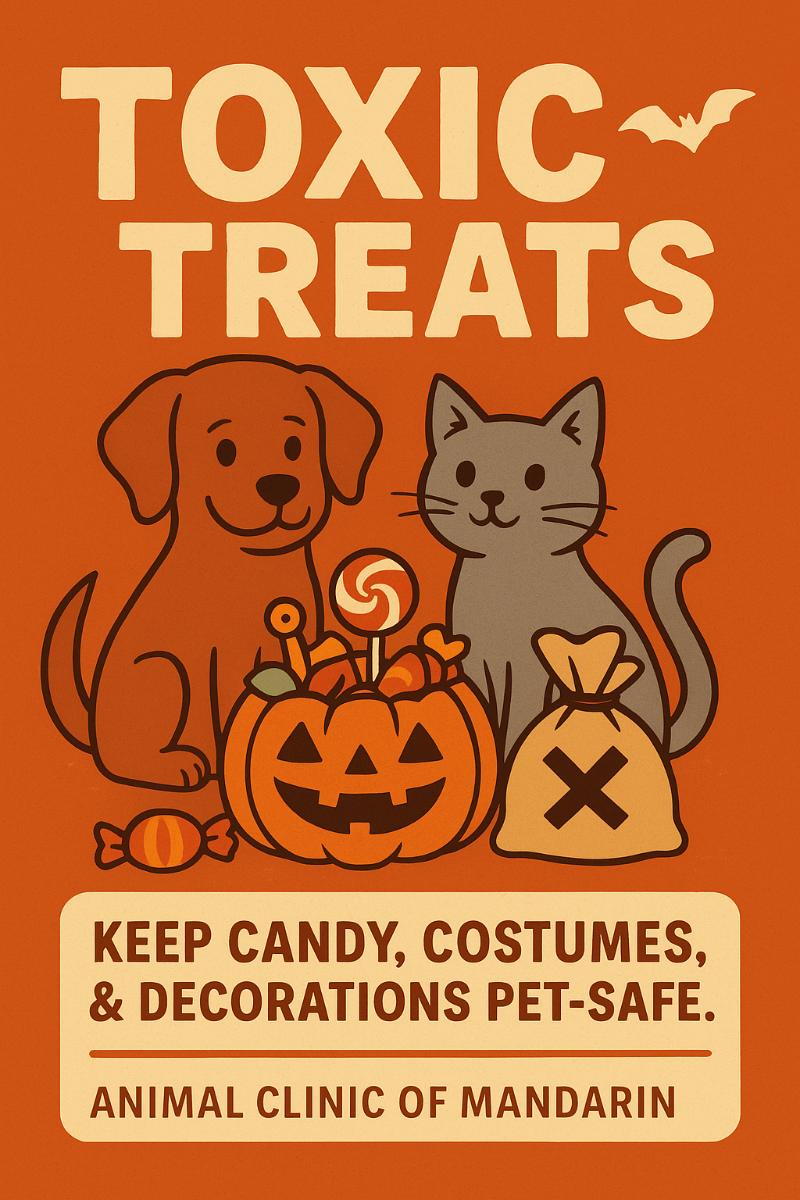
Halloween is all fun and games—until your pet sneaks a few pieces of candy. While it’s tempting to share the holiday excitement, many Halloween treats are toxic for dogs and cats. Knowing which candies are dangerous could save your pet’s life this spooky season.
🍫 1. Chocolate: A Classic (and Dangerous) Culprit
Chocolate contains theobromine and caffeine, both of which are toxic to pets.
Dark chocolate and baking chocolate are especially dangerous because they have higher levels of theobromine.
Symptoms of chocolate toxicity include vomiting, diarrhea, tremors, increased heart rate, and even seizures.
🚨 If your pet eats chocolate—call your vet immediately.
🍬 2. Xylitol: A Hidden Sweetener in “Sugar-Free” Candies
Xylitol is a sugar substitute found in many sugar-free candies, gum, and baked goods.
Even a small amount can cause dangerous drops in blood sugar (hypoglycemia) and liver failure in dogs.
Cats are less likely to eat sweets, but they can still be affected if exposed.
Look for xylitol in ingredient lists—it’s often hiding in unexpected treats!
🍇 3. Raisins and Grapes: Small but Serious
Raisins (and grapes) can cause acute kidney failure in dogs.
Toxicity doesn’t depend on the amount—some dogs get sick from just one raisin.
Keep trail mixes, raisin snacks, and baked goods well out of reach.
🍭 4. Candy Wrappers & Sticks
Even if the candy itself isn’t toxic, wrappers and lollipop sticks can cause intestinal blockages or choking. Dispose of them immediately after use.
🐕 What To Do If Your Pet Eats Halloween Candy
Stay calm but act fast.
Call your veterinarian or the ASPCA Poison Control Center (888-426-4435).
Provide details about what your pet ate, how much, and when.
Early treatment makes all the difference.
🎃 Keeping Pets Safe This Halloween
Store candy in sealed containers, out of reach.
Remind guests and kids not to share human treats.
Keep the ASPCA Poison Control number handy.
Your furry friends can join the fun with pet-safe treats or a new toy instead!